
No such thing as scrap glass
There is no such thing as scrap glass, just glass that hasn’t found its purpose yet.
Tust me to choose an expensive art form to fall in love with!! Outlays to set up and run a glass studio are ridiculously high - hello kiln, glass, electricity and all the other tools and consumables needed to make glass art (that’s a whole other post…). I am having to get creative to maximise the return on anything I make, and I think this is true for all of us no matter our medium.
The issue with “scrap”
Every time a glass artist cuts a circle, makes a test piece, or cuts a little element out of a larger piece of glass we are left with offcuts and unsalable pieces. If not repurposed these offcuts and duffs either take up space in our studio or go in the glass recycling.
We are wasting our stock, and this has an environmental and financial impact. Glass is expensive with a sheet of clear costing £1.50 for a 10cm square and cranberry pink - it’s made with gold!! - costing as much as £23.10 per 10cm square. I get my glass from Warm Glass UK and checked the prices today.
Art glass such as Bullseye Glass - the glass I use - has an environmental impact through production and shipping and we as artist create an environmental impact through running our kilns and a whole host of other activities. This is another topic for future me, but we as artists have a responsibility to minimise our environmental impact. Just like chefs are encouraged to have a nose to tail ethic when using meat, we must have a no such thing as scrap mentality with our glass.
There is no such thing as scrap glass
I do not believe there is such a thing as scrap glass, and glass artists can do so much with our offcuts. I have always enjoyed the challenge of using up the last crumb of a sheet of tekta - clear art glass made by Bullseye - or repurposing a project that hasn’t quite worked or creating my own abstract sheet glass using powder that cannot go back into the jar.
There is a lot of fantastic information out on the web and there are books specifically on using up offcuts. My favourite books for using up offcuts are the waste not series by Paul Tarlow
My favourite thing to do with offcuts are
1. Colour dilution with tekta offcuts
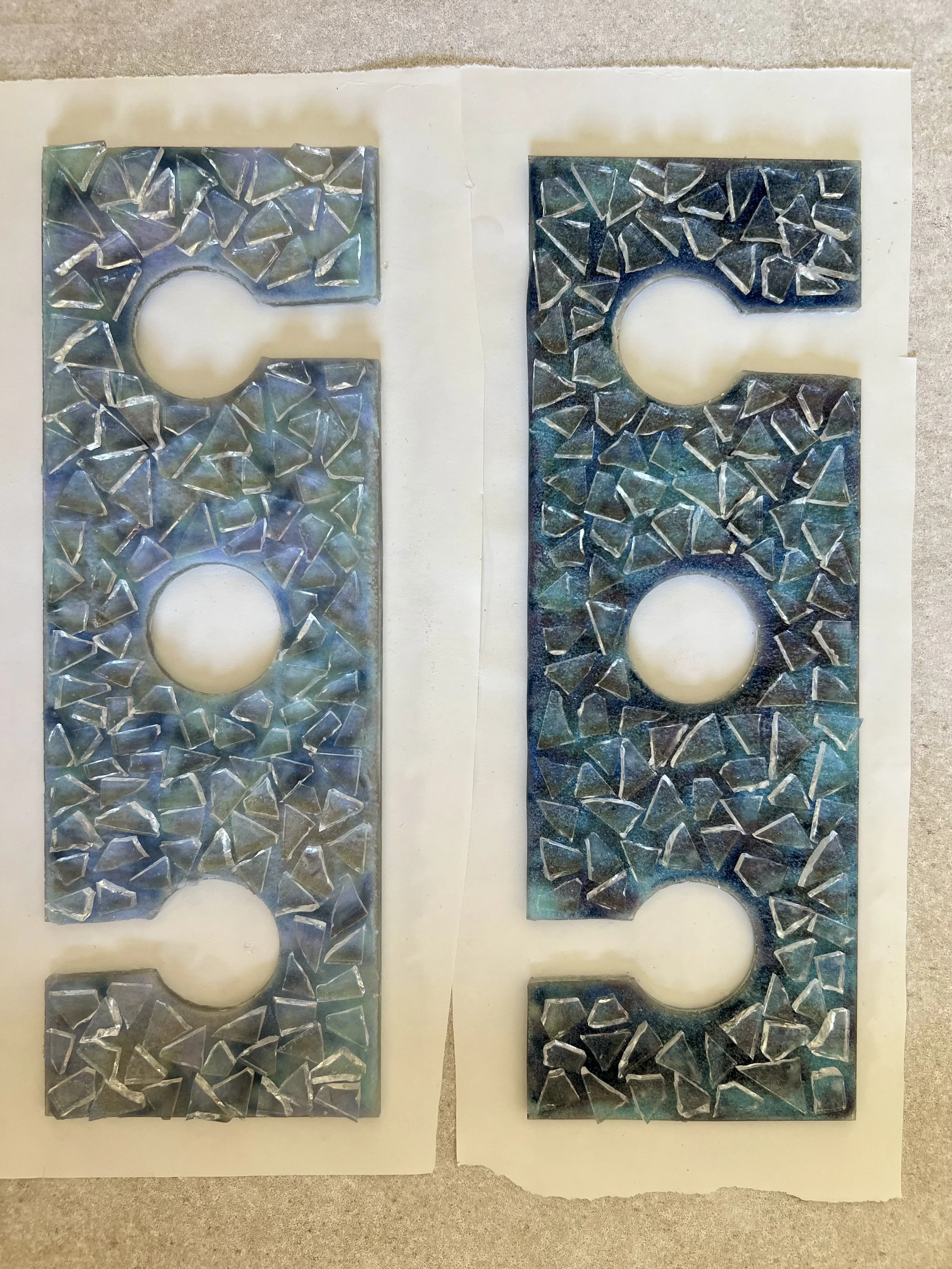
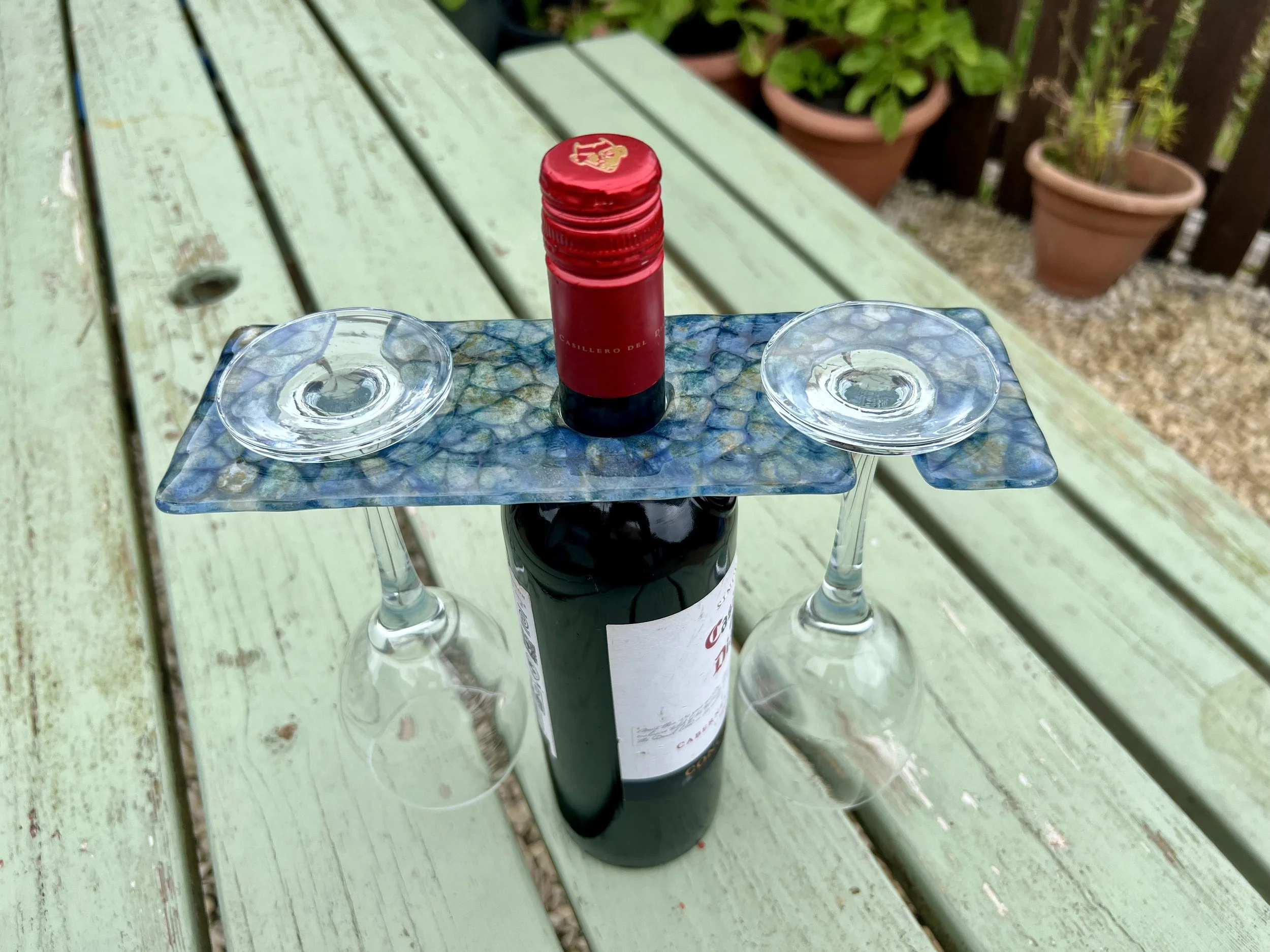
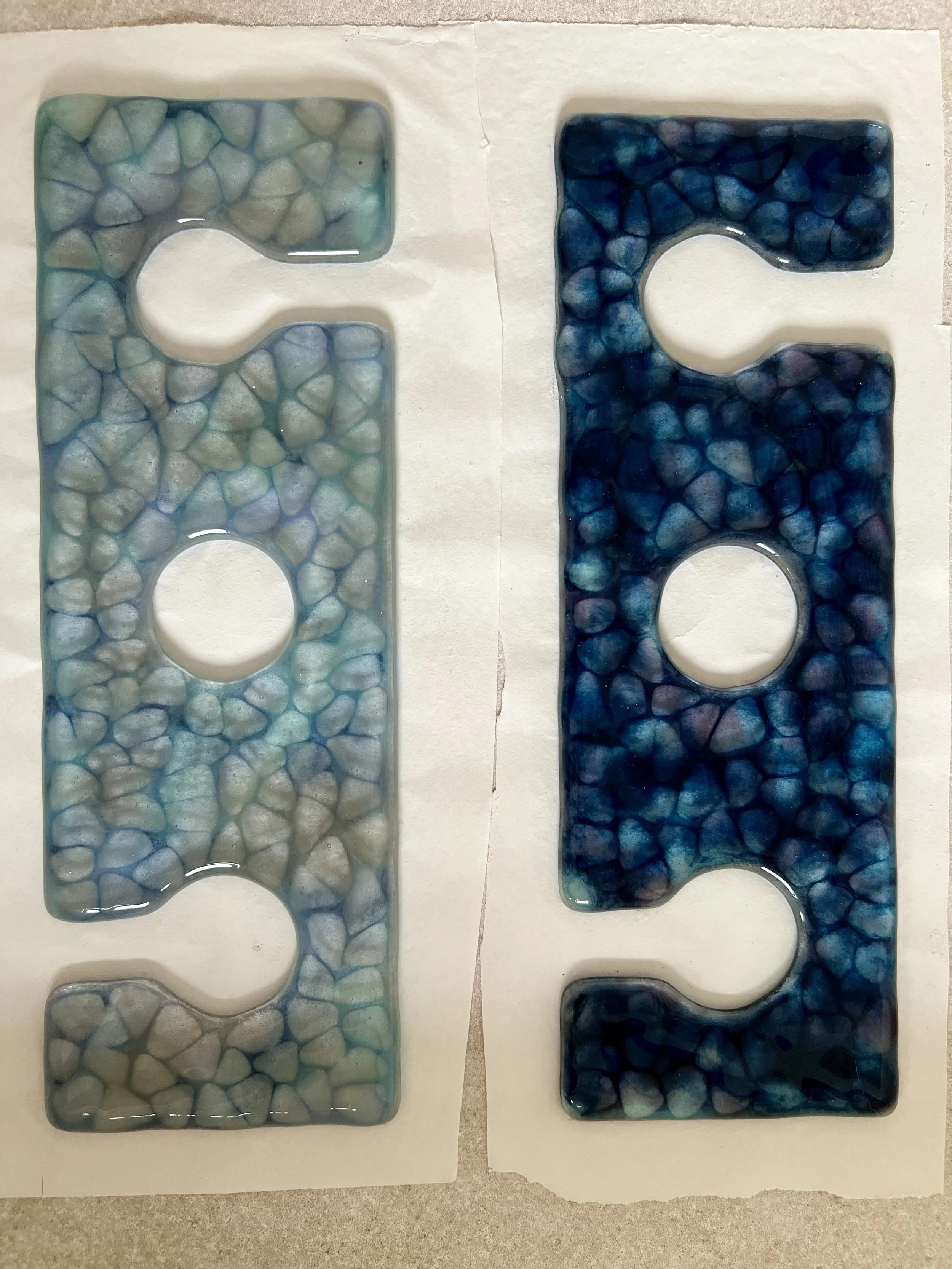
Using tekta offcuts broken down into chips - what I would call large fritt - using mosaic nippers to create colour dilution. Here is an example of how this works, see where the tekta fritt was we have less saturated colour compared to the areas without the fritt, it’s a fantastic way of getting a watercolour(ish) effect with glass. These are wine caddies you place the middle hole over the neck of a bottle of wine and glasses in the two open holes.
2. Slab melts from test pieces and duffs
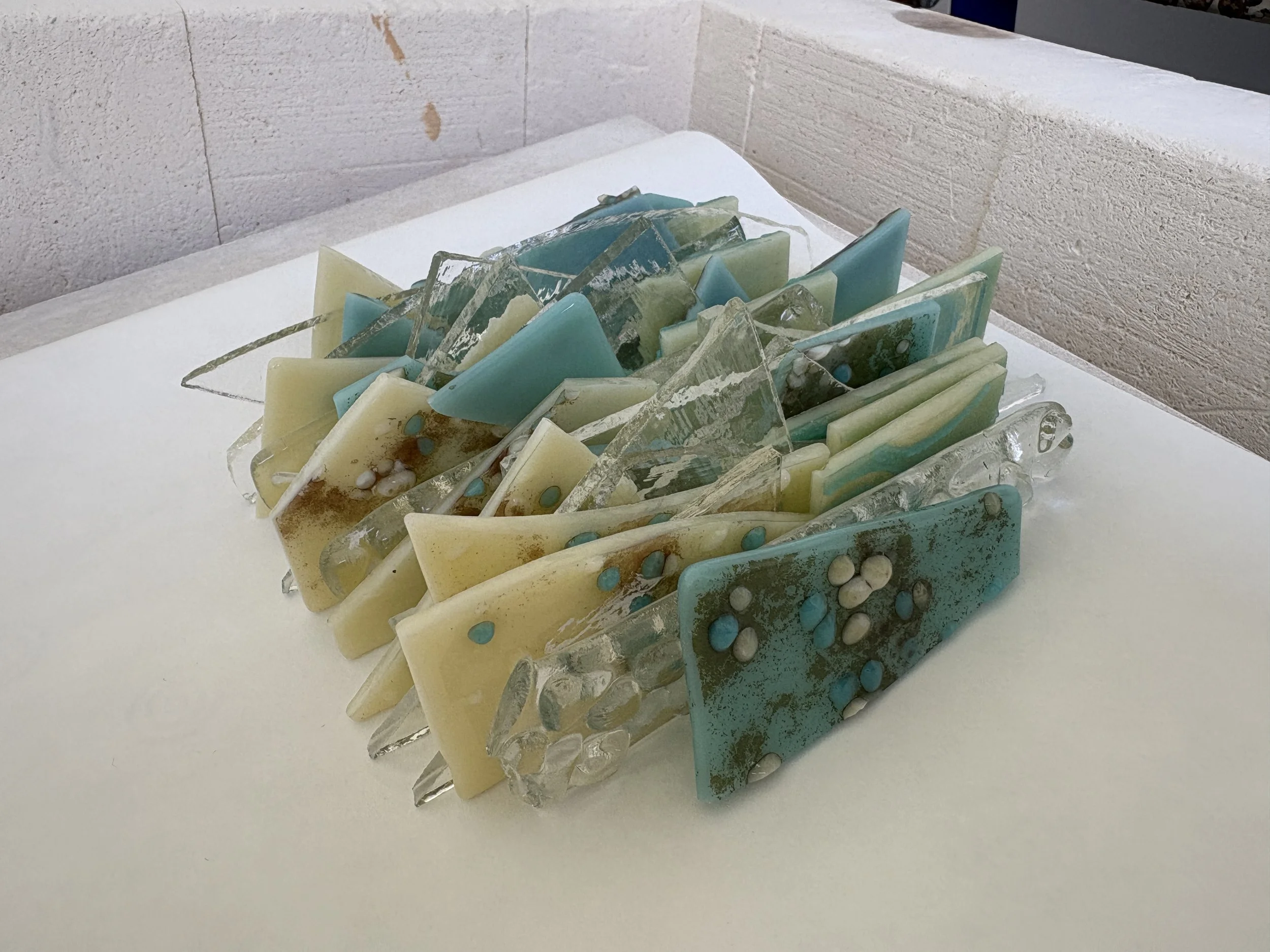
I create “slab melts” to repurpose my test pieces and duffs by piling up the glass on its edge and firing it to 820 degrees centigrade so it all melts and flows out to 6mm - due to viscosity fused glass always wants to be 6mm, but that’s yet another topic for another post. I find that putting the kiln shelf at an angle encourages the glass to flow and merge with interesting patterns.
Once the slab is out of the kiln, I find interesting areas to drill out with my drill press and a 5cm diamond core drill bit - drilling glass is yet another topic for future me to write about. I get so excited by this as you end up with perfect little rondels with abstract imagery and landscapes. A final fire polish - the rondels are put back in the kiln and taken up to at 730 degrees - to make the edges shiny after drilling and you have a saleable item out of your offcuts that looks great in a box frame.


Conclusion
I would encourage all glass artists to experiment with offcuts as sometimes the best things can come as unexpected happy accidents. Some of the most exciting things I’ve made have been from offcuts and the longer I work with glass the more I believe that there is no such thing as scrap, just glass that hasn’t found its purpose.